You've Got Eight Seconds: The Ruthless Craft Behind Today's Must-Hear Song Openers

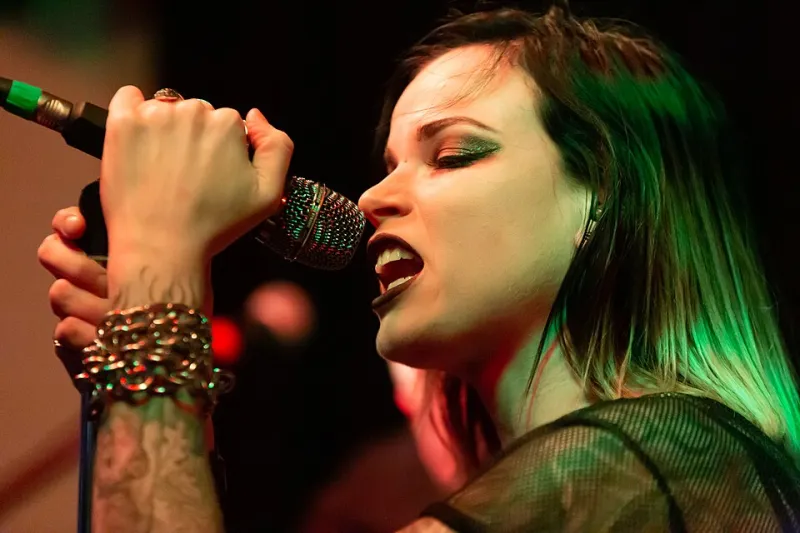
Photo: Michaelgottfried, CC BY-SA 4.0, via Wikimedia Commons
There's an old piece of songwriting advice that goes something like: earn the chorus. Build tension, establish a verse, let the listener settle in before you hit them with the big moment. It's the kind of wisdom passed down through decades of classic rock, soul, and country — the idea that a song should take you somewhere.
That advice hasn't disappeared. But it's definitely been in therapy.
Because right now, in 2024, the music industry is operating under a very different set of rules — ones shaped less by songwriting tradition and more by skip buttons, autoplay queues, and the ruthless scroll of a TikTok For You page. And at the center of it all is a deceptively simple question: what happens in the first eight to ten seconds of your song?
The New First Impression
Here's the basic reality that producers and artists are working with: streaming platforms track listener drop-off in real time. Spotify, Apple Music, and YouTube all measure how quickly people skip or abandon a track, and those numbers feed directly into algorithmic decisions about which songs get promoted and which ones quietly disappear.
The result is that the opening of a song has become the most scrutinized real estate in music. Not the chorus, not the bridge — the very first moment a track plays. Producers call it the "hook forward" approach, and it's become standard practice across pop, R&B, hip-hop, and even some corners of country and indie.
The idea is simple enough: give people a reason to stay before they have a reason to leave. Lead with the most compelling sonic element you have — a vocal riff, a distinctive beat, a memorable melodic phrase — and trust that the rest of the song can fill in the context later.
How TikTok Changed the Equation
If streaming platforms created pressure around song openings, TikTok essentially detonated it. The platform's entire architecture is built around the moment of capture — the instant a video (and its soundtrack) either grabs you or loses you. Songs that go viral on TikTok almost always have a specific quality: something in the first few seconds that feels immediately usable, whether that's a dramatic vocal drop, a punchy lyric, or a beat that syncs perfectly with visual content.
This has created a fascinating feedback loop between music production and social media culture. Producers are now thinking about TikTok compatibility during the creation process, not after. Some tracks are specifically engineered to have a "TikTok moment" — a section that will make sense as a 15-second clip even if someone has never heard the rest of the song.
Sabrina Carpenter's breakout success, for example, wasn't accidental. Her tracks tend to open with a line or a vocal tone that feels immediately distinctive — something that makes you stop scrolling and ask, "wait, who is this?" That quality doesn't happen by accident. It's crafted.
The Science Behind the Snap
There's actual neuroscience underneath all of this, and it tracks closely with what the music industry has figured out through data. The human brain makes an initial emotional assessment of a new sound almost instantly — well within that first ten-second window. If something in the audio triggers curiosity, pleasure, or recognition, the brain signals the body to keep listening.
This is related to what researchers call the "orienting response" — the automatic, involuntary attention we pay to novel or surprising stimuli. A song that opens with something unexpected, something that slightly violates our expectations in a pleasurable way, triggers that response and buys itself a few more seconds of attention.
Producers have internalized this even if they've never read a neuroscience paper. The instinct to put something surprising at the top of a track — a vocal chop, an unexpected chord, a lyric that starts mid-thought — is essentially an intuitive application of that principle.
What Gets Lost (And What Doesn't)
Not everyone is thrilled about where this is heading. There's a legitimate conversation happening among musicians and producers about what gets sacrificed when you front-load every track.
Traditional song structure — verse, pre-chorus, chorus, bridge — exists for a reason. It creates emotional arc. It lets a song breathe, build, and pay off. Some of the most beloved tracks in American music history take their time getting to the point. Think about the slow burn of a classic Stevie Wonder intro, or the way a Bruce Springsteen song can spend two full minutes establishing a scene before the hook arrives. That patience is part of what makes those songs feel substantial.
When everything is engineered to hit immediately, songs can start to feel interchangeable — a series of sonic moments rather than a cohesive listening experience. Some critics argue that the hook-forward era is producing a lot of impressive singles and very few great albums.
But here's the counterargument: constraint breeds creativity. Some of the most inventive production decisions in recent years have come from artists trying to solve the "how do I grab you immediately" problem in unexpected ways. Chappell Roan's theatrical vocal choices, Beyoncé's genre-blurring sonic textures on Cowboy Carter, the way Kendrick Lamar opens tracks with conversational lines that feel like you're walking into the middle of something — these are all solutions to the same challenge, and they're all genuinely interesting.
The Producers Doing It Right
The producers who are navigating this era best tend to share one quality: they think about the opening not as a trick or a gimmick, but as a genuine statement of intent. The first ten seconds should tell you something true about what the song is going to be.
A great hook-forward opening isn't just attention-grabbing — it's a promise. It sets up an expectation that the rest of the track either fulfills or subverts in a satisfying way. When that contract between the opening and the rest of the song breaks down, you get tracks that spike on TikTok and then vanish, leaving listeners vaguely unsatisfied without knowing exactly why.
The artists who build lasting careers in this environment tend to be the ones who crack both sides of the equation: they open with something that stops the scroll, and then they deliver a song that actually goes somewhere worth going.
What Listeners Can Do With This
Knowing all of this doesn't have to make listening feel clinical. If anything, it adds a layer of appreciation for the craft happening in those opening moments. Next time a song grabs you immediately, pay attention to how it grabbed you. Was it a vocal choice? A rhythmic surprise? A lyric that felt weirdly specific?
That moment of capture is intentional. Someone thought hard about it. And in an era where every artist is competing for the same finite slice of your attention, the ones who earn it honestly — with something real in those first few seconds — are the ones worth sticking around for.