Tonight's Setlist Was Decided in a Group Chat: Inside Fan-Run Setlist Culture
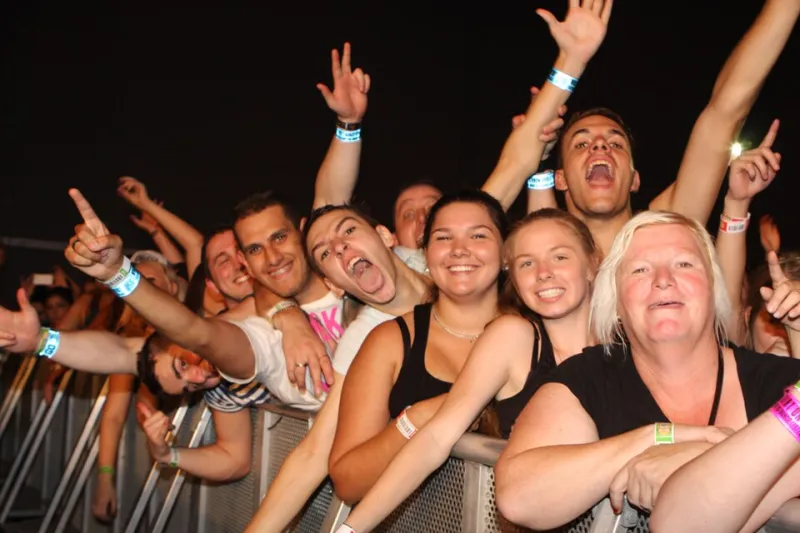
Photo: Eva Rinaldi from Sydney, Australia, CC BY-SA 2.0, via Wikimedia Commons
Somewhere on the internet right now, someone is arguing about whether a band will open with the same song three nights in a row. They have spreadsheets. They have statistics. They have opinions you would not believe.
Welcome to setlist culture — the corner of fandom where live music meets fantasy sports.
The Archivists
It starts with documentation. Sites like Phish.net and the various Dead archive projects have spent decades logging every song played at every show, creating one of the richest datasets in music. Fans know that Phish last played a specific deep cut in 2019, in a particular arrangement, and they know the odds it reappears tonight.
This isn't casual trivia. It's a genuine statistical practice. Fans run probability models on song selection, track 'gaps' — how long a song has gone unplayed — and treat a rare debut or a long-dormant bust-out with the reverence sports fans reserve for a no-hitter.
The Predictors
From the archives grew prediction. Before every tour, message boards fill with speculation threads: which rarities return, which album gets the deep-dive treatment, which city gets the show everyone talks about for a decade.
The psychology here is fascinating. Because jam bands and jamband-adjacent acts change their setlists nightly, every show is a lottery. Fans describe the thrill of hearing the opening notes of an unexpected song as a genuine dopamine event — the musical equivalent of your number hitting. Psychologists would call it variable reward scheduling. Fans just call it the reason they bought tickets to four nights.
The Lobbyists
And then there are the campaigns — the part where fans stop predicting and start pushing.
There's a long tradition of fans using social media to lobby bands directly. Hashtag campaigns to get a specific song played in the city where it was written. Birthday requests that actually worked. Fans who've held signs at shows for years, night after night, until a guitarist finally relented and played the deep cut.
Bands handle this differently. Some lean in — a few artists have openly admitted to checking setlist boards and deliberately subverting predictions, playing the one song nobody bet on. Others have occasionally rewarded the loudest campaign with a surprise placement, sending the whole community into meltdown.
Why It Matters
It's easy to laugh at the obsessive end of this hobby. But setlist culture is doing something real: it's keeping live music surprising in an era when most major tours run the same 20 songs in the same order every night.
The fans who track every show create a feedback loop. Bands know their choices are being documented, compared, and ranked, which raises the creative stakes. A lazy setlist can't hide from a community that remembers 1989. In a weird way, the archivists and predictors are a quality-control mechanism for live music itself.
So the next time your favorite band pulls out a song they haven't touched in years, know this: someone predicted it, someone lobbied for it, and someone, somewhere, is already updating the spreadsheet. The show you're watching was shaped long before the house lights went down.